div#ContactForm1 { display: none !important; }

Monday, May 23, 2022

Tools and Tips for Artists


Think like an artist and draw character concepts from any angle & any lighting.


As an artist, I'm constantly on the lookout for tools or techniques to make the design process easier and more effective. After researching character design tips, I came across this link That suggested using Blender as a helpful tool for creating dramatic lighting for your characters.


Blender is a free modeling tool that is fairly easy to use if you know how to use the toolset. The video here shows you how this works. Once done, you can view your character from any angle and apply lighting. You then use the virtual model to sketch from.


The example shows face/head creation but you can take it to the next level to possibly do bodies as well. Check it out.


Clay Approach

Want a non-technology approach? If you are skillful with clay, you can achieve a similar effect and draw from that instead. Artists tend to think like sculptors when it comes to form. Check out this clip which shows a sculptor at work. Increase the clip speed to see how the artist builds  up the  forms and shapes faster.


Thinking Like an Artist

Marco Bucci talks about how he went from zero to pro-artist, with no art school.
This
must-see clip (click here) shows the lessons he had to learn to think like an artist. Thanks to Marco for his candid and detailed info.


Like this? Get my book here with more artist resources.


Subscribe to this blog if you want to receive more articles like this.

Thanks, and enjoy!

Monday, April 25, 2022

Bruce Lee: A Man Ahead of His Time

                   Some Surprising Life Lessons We Can Learn from His Personal Journey!


Bruce Lee who passed at the age of 33, was a martial arts legend and is credited for bringing martial arts movies to the mainstream. He is featured as one of Time magazine’s “100 People of the Century”. His short life with several twists of fate has a few lessons we can all take to heart.


If you have an advantage in life, exploit it.

Lee was born in San Francisco on November 27, 1940, making him an American citizen. After 4 months his parents returned to Hong Kong in April 1941 giving him dual citizenship in Hong Kong as well. This wound up being a blessing for Bruce when his parents sent him at age 18 to live with his older sister in the US. This was to avoid the frequent street fighting and bad influences in Hong Kong.

Lee’s father was a Cantonese opera star, and Bruce was introduced to the cinema at a young age. He appeared in several films as a child. At the age of nine, he co-starred with his father in The Kid in 1950, which was based on a comic book character and was his first leading role. By the time he was 18, he had appeared in twenty films.

Bruce was exposed to being a cinema star early in life.


Having good friends can make all the difference.

At age 13, Bruce found himself getting into a lot of street fights as a child.  His parents decided to find him a martial arts instructor. William Cheung, a friend and fellow kung fu student, introduced Bruce to Ip Man, a Wing Chun grandmaster. The problem however was Bruce was not considered “pure Chinese”. He was rejected from learning because of the long-standing rule in the Chinese martial arts world not to teach foreigners.  Being a quarter German on his mother's side would be an initial obstacle towards his Wing Chun training. Cheung spoke on Lee’s behalf and he was later accepted into the school.


Early 1964  Lee dropped out of college and moved to Oakland, California to live with James Yimm Lee. James Lee was twenty years senior to Bruce Lee and a well-known Chinese martial artist in the area. James Lee was for introducing Bruce Lee to Ed Parker, an American martial artist. Parker invited Lee to appear in the 1964 Long Beach International Karate Championships. At the event, Lee performed repetitions of two-finger push-ups, fought blindfolded and demonstrated a "one inch punch" which knocked martial artist Bob Baker backwards several feet. The tournament led to Bruce getting an  audition and screen test with TV producer William Dozier. Dozier later cast him as Kato in the TV show titled The Green Hornet.

The Green Hornet
introduced the adult Bruce Lee to an American audience and became the first popular American show presenting Asian-style martial arts.


Have a good side hustle and maximize it.

Bruce came to America in 1959 to live with his older sister. After a short time he moved to Seattle to continue his education. His main job at the time; a live-waiter at a restaurant owned by a family friend. Bruce decided to teach he own style of martial arts called Jun Fan Gung Fu. This was his approach to Wing Chun. Lee taught friends he met in Seattle including Judo practitioner Jesse Glover,  and Taky Kimura. Things snowballed to the point where he was able to open his first martial arts school named the Lee Jun Fan Gung Fu Institute.


Think outside of the box.


James Yimm Lee a friend of Bruce (mentioned above), helped him found a second Jun Fan martial arts studio in Oakland, California. According to Lee, the Chinese community issued an ultimatum to him to stop teaching non-Chinese people. Lee refused to comply, and he was challenged to a combat match with Wong Jack-man, known for his mastery of XingyiquanNorthern Shaolin style kung fu. If Lee lost, he would have to shut down his school, but if he won, he would be free to teach white people, or anyone else.


Bruce who had won the match concluded that the fight had lasted too long and that he had failed to live up to his potential using his 
Wing Chun techniques. Lee decided to develop a system with an emphasis on "practicality, flexibility, speed, and efficiency". He started using different methods of training and constantly adapted other forms of fighting including fencing, boxing techniques and other types of martial art forms. His style which he called Jeet Kune Do, emphasized what he called "the style of no style". This consisted of getting rid of the formalized approach of martial arts, using what worked and discarding what was ineffective.


Bruce who had won the match concluded that the fight had lasted too long and that he had failed to live up to his potential using his 
Wing Chun techniques. Lee decided to develop a system with an emphasis on "practicality, flexibility, speed, and efficiency". He started using different methods of training and constantly adapted other forms of fighting including fencing, boxing techniques and other types of martial art forms. His style which he called Jeet Kune Do, emphasized what he called "the style of no style". This consisted of getting rid of the formalized approach of martial arts, using what worked and discarding what was ineffective.


Bruce who had won the match concluded that the fight had lasted too long and that he had failed to live up to his potential using his 
Wing Chun techniques. Lee decided to develop a system with an emphasis on "practicality, flexibility, speed, and efficiency". He started using different methods of training and constantly adapted other forms of fighting including fencing, boxing techniques and other types of martial art forms. His style which he called Jeet Kune Do, emphasized what he called "the style of no style". This consisted of getting rid of the formalized approach of martial arts, using what worked and discarding what was ineffective.

So in 1967, Bruce was thinking and developing an MMA fighting system way before that term or concept even existed!


Work hard, be confident and opportunities will come.

Although Lee had done a season of the Green Hornet and several TV appearances, work was sparse. Lee pitched a television series of his own tentatively titled The Warrior, to Warner Bros. which was a western featuring martial arts. Lee's concept was retooled and renamed Kung Fu, but Warner Bros. gave Lee no credit according to Lee’s wife Linda Lee Cadwell. They also cast American actor David Carradine as the lead. Producer Fred Weintraub suggested that Lee to return to Hong Kong and make a feature film which he could showcase to executives in Hollywood. America was not yet ready for a non white movie superstar. Lee returned to Hong Kong, unaware that The Green Hornet had played much success in Hong Kong. He was also surprised to be recognized as the star of the show. Lee signed a film contract to star in two films produced by Golden Harvest.


“To hell with circumstances. I create opportunities.”
Bruce Lee


The Big Boss (1971) proved to be an enormous box office success across Asia and catapulted him to stardom. He soon followed up with Fist of Fury (1972), which broke the box office records set previously by The Big Boss.  Lee negotiated a new deal with Golden Harvest and for his third film, Way of the Dragon (1972), and was given complete control of the film's production as the writer, director, star, and choreographer of the fight scenes. In 1964, at a demonstration in Long Beach, California, Lee met karate champion Chuck Norris. In Way of the Dragon, Lee introduced Norris to moviegoers as his opponent. Their showdown has been characterized as "one of the best fight scenes in martial arts and film history”.


Lee began work on his fourth Golden Harvest film Game of Death, when Warner Brothers offered Lee the opportunity to star in Enter the Dragon, the first film to be produced jointly by Concord (Lee’s production company), Golden Harvest, and Warner Bros. Filming began in Hong Kong in February 1973 and was completed in April 1973. However, only a few months after the completion of Enter the Dragon, and six days before its July 26, 1973, release, Lee died. Enter the Dragon would go on to become one of the year's highest-grossing films and cement Lee as a martial arts legend. It was made for US $850,000 in 1973 (about $5.5 million adjusted for inflation today). Enter the Dragon went on to gross an estimated $350 million worldwide.


Be confident in your abilities and you may be able to do something incredible.

Though Lee’s life ended way too abruptly, he was able to transcend the film medium into superstardom. As you can see in his brief time here, he was able to do some incredible things. What can we take to heart?


- If you have an advantage in life, exploit it.

- Having good friends can make all the difference.

- Have a good side hustle and maximize it.

- Think outside of the box.

- Work hard, be confident and opportunities will come.

- Be confident in your abilities and you may be able to do something incredible.


Monday, March 14, 2022

The Matrix Is Here And Maybe We Just Don’t Know It.


In the movie, “The Matrix”, Keanu Reeves plays a character called Mr. Anderson. He is a computer programmer by day but goes by his alias Neo, a hacker, that he becomes after hours. He is looking for a man by the name of Morpheus, a fugitive of the law, who has the answer to the question, “What is the Matrix”.


The dream jump cuts and action chase sequences have us wondering if what we are seeing is real. The interrogation scene when we see Neo’s mouth seals up and an implant inserts itself into his stomach really make us wonder what is going on. The movie is structured exquisitely and breaks the cardinal “15-minute rule”. The audience must know what is going on by the first 15 minutes, but the payoff is worth the wait.

In the pivotal point in the movie, Neo meets Morpheus and is given the choice of the red or blue pill. Morpheus says “You take the blue pill… the story ends, you wake up in your bed and believe whatever you want to believe. You take the red pill… you stay in Wonderland, and I show you how deep the rabbit hole goes.”


Neo chooses the red pill because as Morpheus says, “ You have a look of a man who accepts what he sees because he is expecting to wake up”. Neo is asked if he believes in fate. Neo replies, “No”. When asked why he responds, “ Because I don’t like the idea that I’m not in control of my life”. Neo appears to be engulfed in silver after touching a mirror and passes out. Dream or reality? It is here, after almost a half-hour into the movie where we find out what the matrix is.  


Neo wakes and he realizes he is hard-lined in a city full of cocoons. As Morpheus later explains, the matrix is a computer simulation that humans are grown into. A prison of the mind, that you can’t see, or touch, used for control, to harness humankind as an energy source for the machines. AI has taken over and won. As Keanu might say, “Whoa!”


Ok, let’s step back for a minute. We are increasingly becoming more dependent on technology and less dependent on face-to-face interaction. How many young people seem more comfortable on their phone texting rather than having an in-person conversation? The pandemic has not helped at all either, forcing us to be more virtual, with social media making it seem easy to be connected.


What about facts versus fiction? Just because something is on the internet does not make it true. Social media was created to share ideas and opinions and unlike established reputable news institutions, sources and content don’t have to be vetted. What we found out from Frances Haugen, the Facebook whistleblower, is that “the machine-learning models that maximize engagement also favor controversy, misinformation, and extremism: put simply, people just like outrageous stuff.” 


If you are fed a steady diet of social media without questioning some of the things you see, you are in trouble. Tik Tok challenge anyone? What happened to plain old common sense. “You take the blue pill… the story ends, you wake up in your bed and believe whatever you want to believe.


While we haven’t become the power source yet for an all-encompassing AI, it seems that the machine learning algorithms of some social media platforms are doing a pretty good job keeping us in our own isolated bubble of information, more likely negative for longer engagement times, hence profit.

The good thing for us older folks is that we were around before technology had made such a major impact. We need to let the younger folks know it’s better to have an open mind, question what you read/see and do some legwork to find out the truth of things.

Focus more on our commonalities and less on divisive differences. Put down the Oculus goggles, get out of the matrix, talk and get to know each other with less technology, and remember there is only one race; the human race.


Sunday, January 23, 2022

Must See Animation - 6 Reasons Why You Should Watch "What If?" (Disney +)


Why is Disney + "What if",  in our list of must-see animation. Here are 6 reason why:

1.  You are a fan of the MCU.

If you liked everything leading up to Infinity Wars/ Endgame and beyond you will love this show. Action, laughs, and tear in the eye moments. 

2. The writing / storylines are really cool.

Imagine Rod Serling writing episodes for Marvel Studios. You kind of get the picture now... LOL. Hang in there for episode #2; a nice send off for Chadwick.

   
3. The production & character design are nicely done.


Character design and production work on this show is top notch! Ryan Meinerding and Paul Lasine  know their stuff and have been doing it for a while. Check out the links above. Some scenes brought back memories of  Akira and Ghost in the Shell, and who does not love Jack Kirby energy effects.. animated. Wow!


4. Voice acting is from the original actors.

85% of the voice acting is the original actors. Samuel L. Jackson, Benedict Cumberbatch, Chadwick Boseman, Micheal B. Jordan, Mark  Ruffalo, Jeremy Renner, Paul Rudd, Frank Grillo, Michael Rooker, Hailey Atwell..need we go on? 

5. Action scenes are spot on!


The animation is serviceable, but the action scenes are on point!


6. They finally got cel-shading right.


There has been some questionable cel-shading in the past from various studios. Iron Man, Armored Adventures, & Iron Man / Captain America in Hero's Unite come to mind. They got it right this time. Just the right touch of 2d and 3d. 

Check out the trailers here. Or better yet watch all 9 episodes

Do you have a must-see animation movie? Shoot me an email to jon@tripleadude.com
If your choice is solid I will add you to a write up.

Into storytelling, comics, and animation?
Then get a copy of these must-read guides.
Click on the links below     


Idea Genesis
Generate solid story ideas at lightning speed.


Cartoon Production Resource Guide      
200 + top resources for artists, comic creators & animators.


Audio Production Resource Guide
400 + resources for musicians, producers, and filmmakers.


Subscribe in the upper right box for more cool posts to come.


Monday, January 17, 2022

The Importance of Plot and Subplot


6 Types Of Subplots For Screenwriters To Include In Their ...


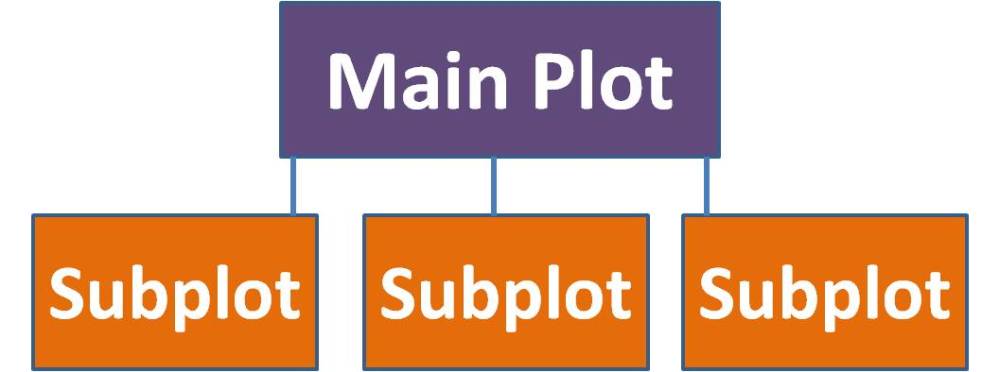
Plot supplies the general direction of your story, but the subplot keeps your audience hooked. How does that work? Let get to the specifics of plot vs. subplot and how they help each other. We are assuming that your story type is dramatic.


Plot:
The main storyline from beginning to end. The exploits of your hero and villain in a 3 act structure connect to your story's theme/purpose and give the reason why an audience stays engaged. Your audience wants to see the outcome of the drama.


Subplot: 
This is a smaller secondary plots that keeps the story moving. The subplot adds obstacles in the way of your main character and conflict. Obstacles require motivation and action to be overcome, while conflict creates drama and suspense. The subplot provides forward motion without which the story would be dead and motionless.


When you read a 1-2 line synopsis that is your plot remember, we have 1 1/2 - 2 hours of screen time to fill. Subplots keeps you audience involved and wanting to watching your film.


A good exercise is to watch a good movie and jot down the all subplots. Let's take a look at some classic examples.


Raiders of the Lost Ark-

Plot: Archaeologist Indiana Jones is hired by the U.S. government to find the ark of the covenant before Hitler's Nazis can obtain its power.

Subplots (Act One & Two):

1. Indy must outwit some treacherous guides in the jungle to obtain a precious idol but has a run-in with his evil nemesis, Belloq.

2. Jones is also a teacher of history and is hired by government agents to track down a headpiece that will lead to the ark of the covenant. In this scene, he explains the purpose and power of the ark (setup) "The army that has the ark before it will be invincible". This is an information moment that explains the "why" of this movie.

3. Indy must track down his old mentor Dr. Ravenwood but finds out he is dead from Ravenwood's daughter, his spurned flame, Marion. She secretly has the golden headpiece which he discovers after he rescues her in a bar fight with the Nazis. They join forces. In the fight, the lead Nazi, Toht attempts to grab the headpiece but instead burns his hand with an inscription from one side.

The tension here between Indy and Marion from the backstory that is hinted at.

3. Indy and Marion go to Egypt to visit his old excavator expert, Sallah. Sallah tells Indy that Belloq is in charge of a dig that is near the Well of Souls. Indy knows that they can't find the precise location of the dig without the info from the headpiece and they seek out a man who can interpret the inscriptions on the headpiece.

4. An old man deciphers the inscriptions from both sides of the headpiece, and gives them precise instructions on how to find the ark. Indy and Sallah discover that the Nazis are digging in the wrong spot. Toht only had 1/2 the inscription burned into his hand. Sallah saves Indy from being poisoned in this scene. They must figure out a way to unearth the ark while in the Nazi's base camp.

At this point, all bets are off as Indy and Marion risk life and limb against Belloq and the Nazis, as they go toe to toe trying to get their hands on the ark. Note that in each instance, of subplot a crucial piece of info or backstory is revealed and is sometimes mixed with action to propel the story forward.


Star Wars: A New Hope 


Plot:
 Luke Skywalker must join forces with Obi-Wan Kenobi, a Jedi knight, Han Solo, a cocky pilot, his second mate Chewbacca and two droids to rescue Princess Leia from Darth Vader and his Imperial forces.


Subplots (Act One & Two):  

1. Princess Leia's ship is overtaken by Lord Darth Vader and imperial forces. The princess however has planted secret information in the memory unit of a droid (R2D2) who escapes to the planet of Tatooine along with his fellow droid C3P0.

2. The droids are captured by Jawa's and sold to Uncle Owen and nephew Luke Skywalker.

3. While Luke is cleaning the droids he comes across a fractured message from Princess Leia needing help from Obi-Wan Kenobi. Luke is asked to remove a restraining bolt which might enable R2 to play the full message. This doesn't seem to work and Luke is called away for dinner.

4. At dinner Luke reveals that the droids may belong to an Obi-Wan Kenobi. Luke asks if Obi-Wan is possibly related to a hermit named Ben Kenobi who lives several miles away in the Dune Sea. Owen claims Ben is a crazy old man and Obi-Wan is dead. Owen makes a reference that Obi-Wan may have known Luke's father but when pressed on the matter he changes the conversation. Luke is asked to stay on the farm another year when he was planning to join the academy to become a space pilot. This angers Luke and he leaves in a huff. Luke's aunt Beru tells Owen that he has too much of his father in him. Owen says that's what he is afraid of.

Quite a lot of inference and backstory packed in this short scene which has major foreshadowing implications.

5. When Luke returns to the garage he discovers that R2 has escaped. Luke tells C3PO that it is not safe to chase after him during nightfall because of the dangerous Sand People in the area and they would have to do that in the morning hopefully before his uncle finds out.

6 . What happens next is that Luke tracks down R2, has a run-in with the Sand People, and is rescued by Ben Kenobi.

7. In the scene that follows Ben reveals that he is Obi-Wan Kenobi but has not gone by that name in a long time and that he and his father were both Jedi Knights back in the day. Ben also reveals a pupil named Darth Vader betrayed and murdered Luke's father.  He gives Luke his father's lightsabre. Leia's message played in full reveals that important info must be taken to her father on the planet Alderaan and the Obi-Wan is her only hope.  Ben needs Luke's help

A lot more backstory is revealed here and all bets are off when Luke discovers his aunt and uncle are killed by the imperial stormtroopers. He joins Ben on the journey. Note once again that in each scene, the subplot moves the story forward and also supplies crucial information and action.


What is interesting about subplots, as you can see in the examples are the additional character types that are added to keep the subplots going. Also notice that without subplots, your story will have no forward motion and generate no interest at all to your audience. In essence total DOA! It's pretty obvious that your book page count or movie screen time is integrally tied into your subplots.


Tip from Hitchcock (The Master of Suspense):
Hitchcock sometimes refers to the subplot as the McGuffin. It is the thing that everyone is after but we the audience don't care. What does that mean?  We care about what happens to our characters, if the story is told well but not necessarily what they are after. The subplot adds complications that make the audience more concerned about the characters.
.
So when creating your next story pay particular attention to your overall main plotline and keep your subplots interesting.

Want more? You may also want to check out:

Types Of Story & Why It Matters
Secrets to Overcoming Writer's Block
Overcoming Writer's Block Part II
Character Types Will Make Or Break Your Story

Are you finding these post helpful? Subscribe so you don't miss out on anything.

Enjoy and share this with your friends.

Wednesday, January 12, 2022

The Etherington Bros - Inspirational Art / Tutorials or Both?


I happened to go through my Pinterest pins. I have them neatly organized by category now. It has become my inspirational rejuvenation / drawing reference tool. However, I keep seeing these interesting and cool mini drawing tutorials that show up in my pins!


Ok, it's my fault. Yes, I can't help but save these bad boys every time I see them, but who are these guys...The Etherington Bros? 


Lorenzo (the artist) and Robin (the writer), it appears started posting work on sites like deviant art, conceptart.com. and their under banner, Studio Blink Twice in the early 2000's.

Things really took off when they starting promoting their "How to Think When You Draw" & "How to Think When You Write" books on Kickstarter back in 2017. They have since broken the record for the most funded artbooks of all time on Kickstarter for three consecutive years; in 2019, 2020 and 2021.

The Etherington's have been blogging since 2009 and their client roster includes studios such as Disney, DreamWorks, Aardman, and the BBC.    

Check out their blog here, and be on the lookout for their free art tutorials, free writing tutorials 
(300 + each and counting) and content on Pinterest.


P.S. - Who are your favorite artists for inspiration? Shoot me a message at jon@tripleadude.com

Don't forget to subscribe to get more cool posts. Enjoy!